

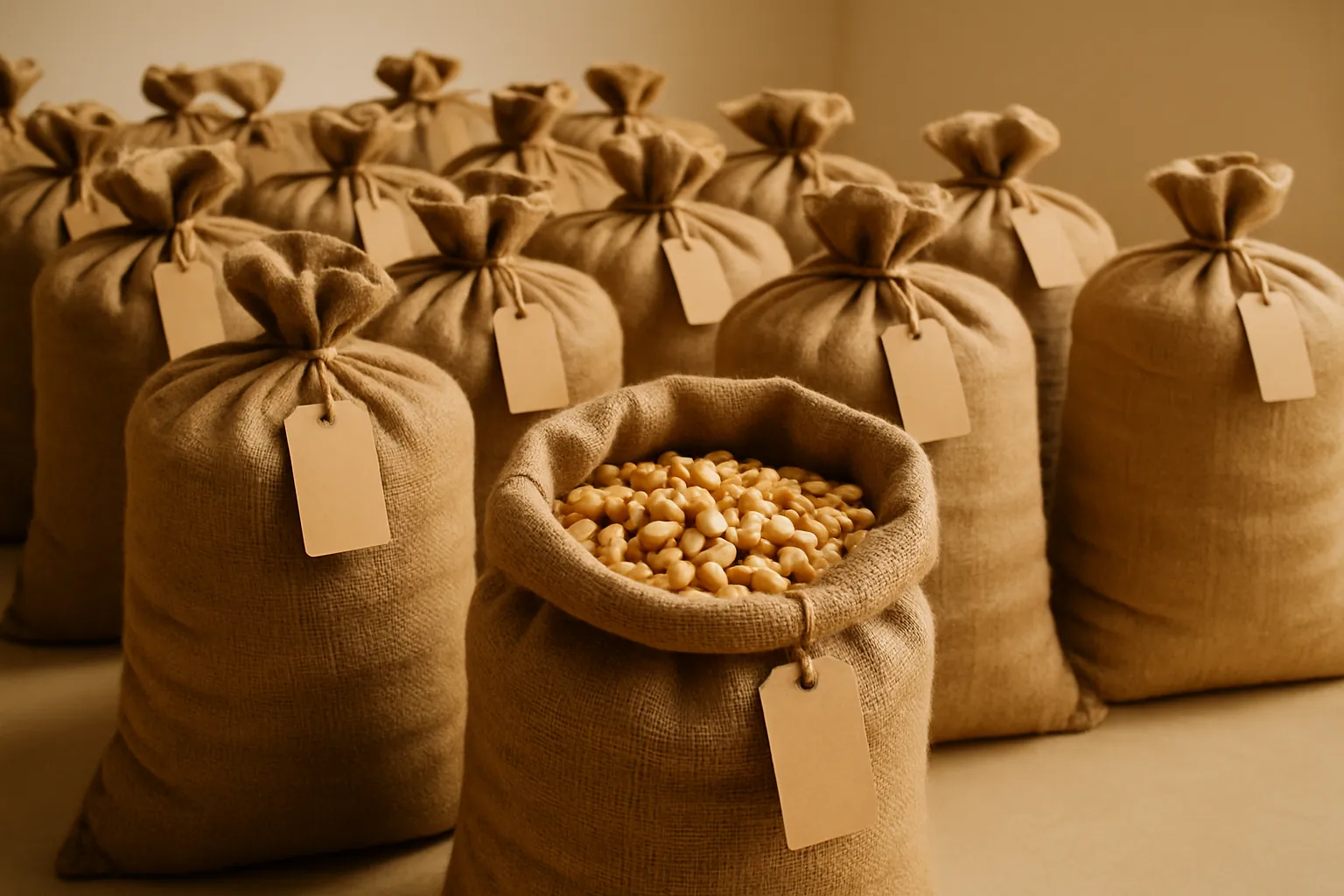
Traceability has become a word suppliers say rather than a thing they do. Stripped of the marketing, it means one test: pick any bag in a delivered container and ask where it came from — and get an answer with dates, places and documents rather than a shrug. The mechanism that passes the test is unglamorous: a lot number, assigned early, that survives every hand-off from farmgate to container seal. Here is that chain as we run it.
The chain, link by link
- Farmgate collection — smallholder deliveries are weighed and recorded at the buying post with the grower group, village and collection date. This record is the root of everything downstream.
- Warehouse intake — collections are aggregated into an intake lot with a unique number encoding district, season and sequence. Moisture and intake checks are recorded against this number.
- Processing batch — for commodities processed in Tanzania, each batch references the intake lots feeding it, so a kernel carton points back through the batch to the districts it came from.
- Export lot — the contracted parcel gets an export lot number tying together the batch records, the composite lab sample and its analysis certificate, and the sealed retained sample.
- Container stuffing — the loading report records the export lot, bag or carton count, container number and seal number, photographed at stuffing. The seal closes the chain.
The honey nuance, stated honestly
Honey is the product where traceability has to be got right first time, because it cannot be reconstructed later. A bag of sesame can be traced back through the weighbridge ticket that still sits with it; a drum of honey is a blend of many beekeepers' buckets, and once it is sealed there is no way to separate them again. So the record has to be written at the bulking bench: which groups delivered, from which forest collection rounds, at what moisture, into which drum. A buyer asking 'where did this drum come from' gets a list of named groups and a harvest window. What we will not do is imply that one beekeeper stands behind a container — that is not how forest honey is gathered anywhere.
What you can ask us for
- The lot history sheet — the one-page trace from collection records through intake and batch to the export lot on your documents.
- The laboratory analysis certificate tied to your export lot number, not a generic company certificate.
- The loading report with container and seal numbers, and the stuffing photographs.
- The retained-sample reference, so a dispute can be arbitrated against sealed material from your actual lot.
- For honey, the bulking record identifying the beekeeper groups and collection rounds behind each drum.
“The test of a traceability system is whether the supplier flinches when you pick a bag at random. Ask us for the trace on any lot we have shipped — that offer is the system.”
- Asha Ngonyani, Quality Manager
Why this matters beyond compliance: importers face growing due-diligence obligations on supply-chain origin, and a supplier who cannot produce lot-level records pushes that burden — and its risk — onto the buyer. A working lot system also makes quality problems small: when something is wrong, the lot number bounds it to specific bags rather than casting doubt over a whole container. Traceability, in the end, is just quality control with a memory.
Related reading
Leave a Comment
Your email address will not be published.