

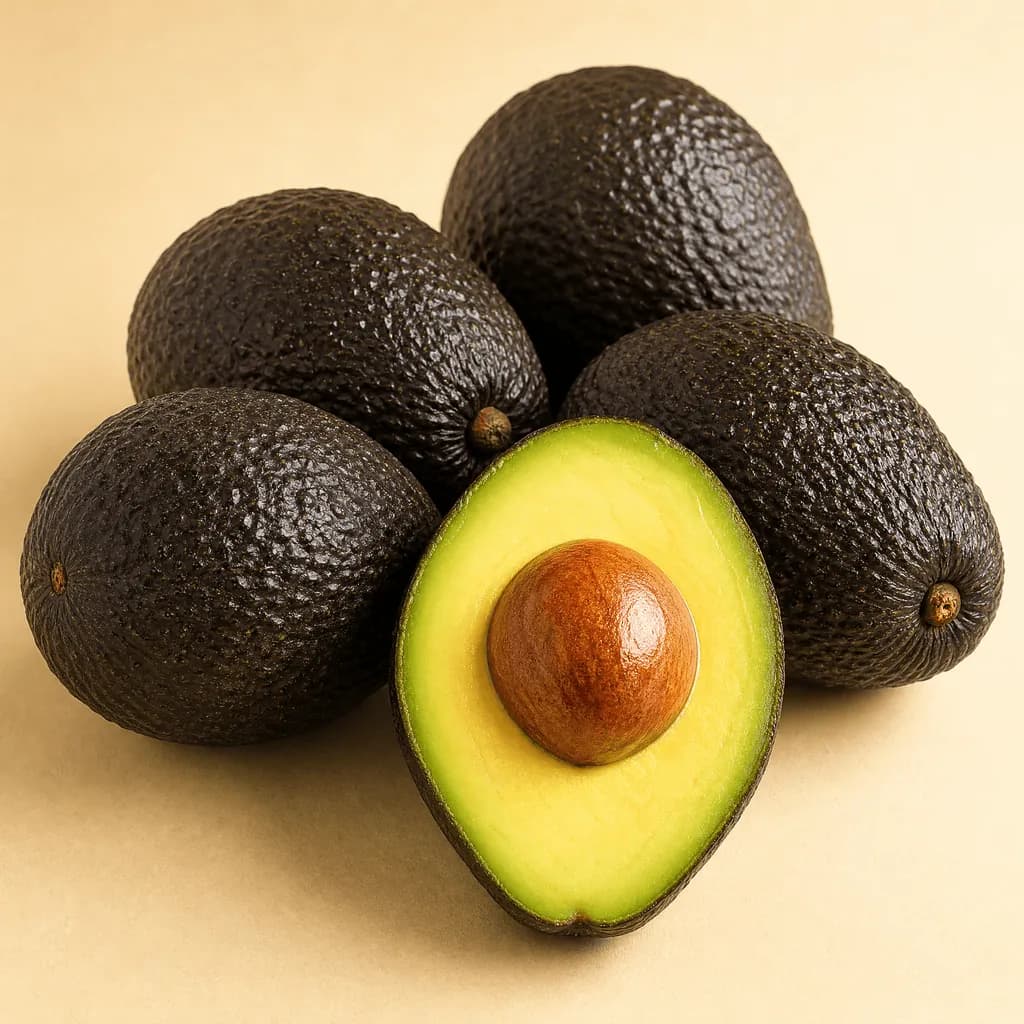
Hass is an avocado cultivar, or cultivated variety. Tanzania is a country of origin, so the same avocado can be both Tanzanian and Hass. Neither word alone proves quality class, carton count, maturity or current availability.
Is Hass a country or a variety?
Hass is an avocado cultivar, or cultivated variety. Tanzania is a country of origin. One avocado can be both Hass and Tanzanian.
Read each avocado description field separately.
- Cultivar: Hass: The named avocado variety. Does not establish: Growing country, size, class or maturity.
- Origin: Tanzania: The country where the fruit was grown. Does not establish: Cultivar, quality class or current availability.
- Growing district: A more specific origin within the country. Does not establish: A test result or a quality guarantee.
- Quality class: The agreed classification under the named standard. Does not establish: The cultivar or carton count.
- Count and net carton weight: The number of fruit in a carton and its stated net weight. Does not establish: Quality class or maturity.
- Dry-matter requirement: A maturity criterion to check against a documented test. Does not establish: Proof that a particular lot passed.
Are all Tanzanian avocados Hass?
The word Tanzania does not establish the cultivar. Ask for the variety to be stated separately; do not assume fruit is Hass from its origin label.
An offer reading only “Tanzania avocado” leaves the variety unstated. “Hass avocado, origin Tanzania” supplies both fields. A growing district adds detail to the origin; it does not replace the cultivar name.
Does Hass specify size or quality class?
No. Specify the quality class, carton count and net carton weight separately. The cultivar name does not set those requirements.
Read a count alongside the net carton weight. Within the same carton weight, a lower count means larger fruit on average. A variety name gives you neither a count nor an agreed size mix.
For the sizing detail, use the separate count guide.
A hypothetical avocado description, annotated
The following is a fictional specification example for reading practice. It is not an offer, an available lot, a shipment record or a laboratory result.
“Fresh avocados | cultivar: Hass | origin: Tanzania, Njombe | requested class: Class I to UNECE FFV-42 | requested pack: count 18, 4 kg net carton | required minimum dry matter: 23%, tested per orchard block before picking.”
- Hass and Tanzania answer different questions: variety and growing country. Njombe adds the growing district.
- Class I is a requested classification under the named standard. Writing it in this fictional description is not proof of conformity.
- Count 18 and 4 kg belong together: 18 fruit in the stated net carton weight. This example does not promise that count is available.
- The 23% figure is a requirement, not a reported result. Ask for the test record tied to the orchard block before treating it as evidence.
- The description still leaves quantity, timing, destination and current availability to be confirmed.
Can skin colour alone establish shipping maturity?
No. Maturity at harvest and ripeness for eating are different checks. Dry-matter testing helps assess harvest maturity. Hass skin can darken as the fruit ripens after picking, but colour alone cannot establish harvest maturity or growing country.
UC Davis describes dry matter as a maturity indicator and explains that maturity criteria vary by cultivar. Its California Hass threshold is not a universal legal minimum or Afri Exports’ contract requirement.
Which details apply to Afri Exports?
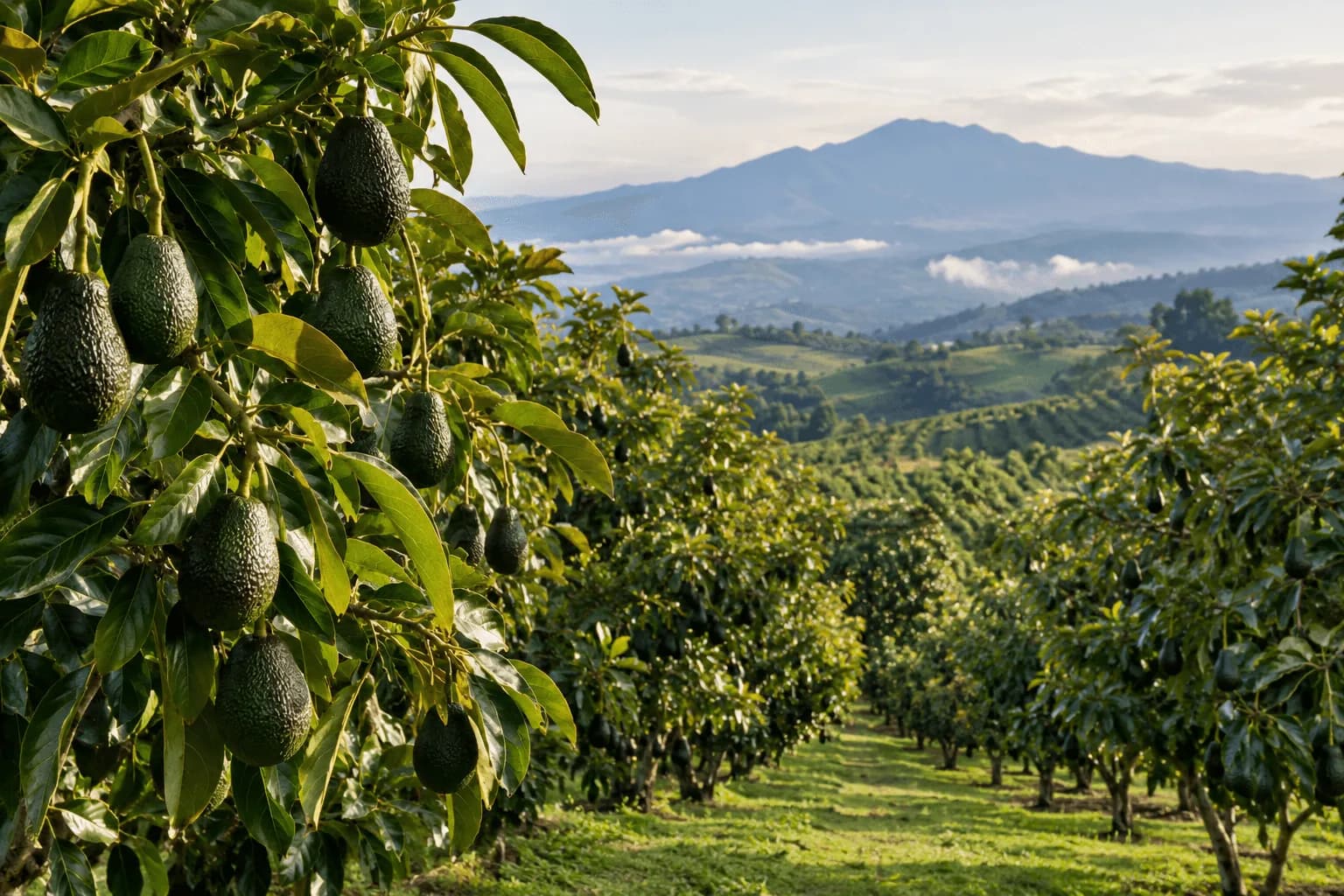
Our documented Hass programme covers Njombe, Mbeya, Iringa and Songwe. Its specification is Class I to UNECE FFV-42, counts 12–30 in 4 kg export cartons, with minimum dry matter of 23% tested per orchard block before picking. These programme specifications do not confirm stock or a particular count for your dates.
The documented export season is roughly February to mid-September. Confirm current availability by enquiry; a Tanzanian origin label is not a promise of year-round supply.
Check the programme and its export arrangements.
For an enquiry, send the required count and carton weight, quantity, timing and destination. Ask for the cultivar, origin, class and maturity evidence to be confirmed separately.
Related reading
Leave a Comment
Your email address will not be published.