

At a glance
- Export season runs roughly February to mid-September, peaking mid-window.
- Njombe, Mbeya, Iringa and Songwe in the Southern Highlands grow almost all of the export crop.
- Hass dominates; Fuerte exists in real but much smaller volume.
- Fruit packs in 4 kg cartons by count, 12 to 30 — Europe pulls 16 to 20, India and the Gulf take larger counts.
- Dry matter is the maturity test that matters: 21 per cent is the floor, 23 per cent is what European buyers pay for.
- Reefer sailings run out of Mombasa; pulp temperature 5 to 6 degrees, controlled atmosphere on the long lanes.
Five years ago Tanzanian avocados were a footnote. Production has gone from under 50,000 tonnes in 2020 to around 201,000 in the 2024/25 season, with a national target of 235,000 by 2026/27 and exports heading toward 40,000 tonnes. Europe takes roughly 40 per cent of what leaves, India around 30. That is not a pilot project any more, and if you buy avocados it is now an origin you have to have an opinion about.
Where does the fruit come from?
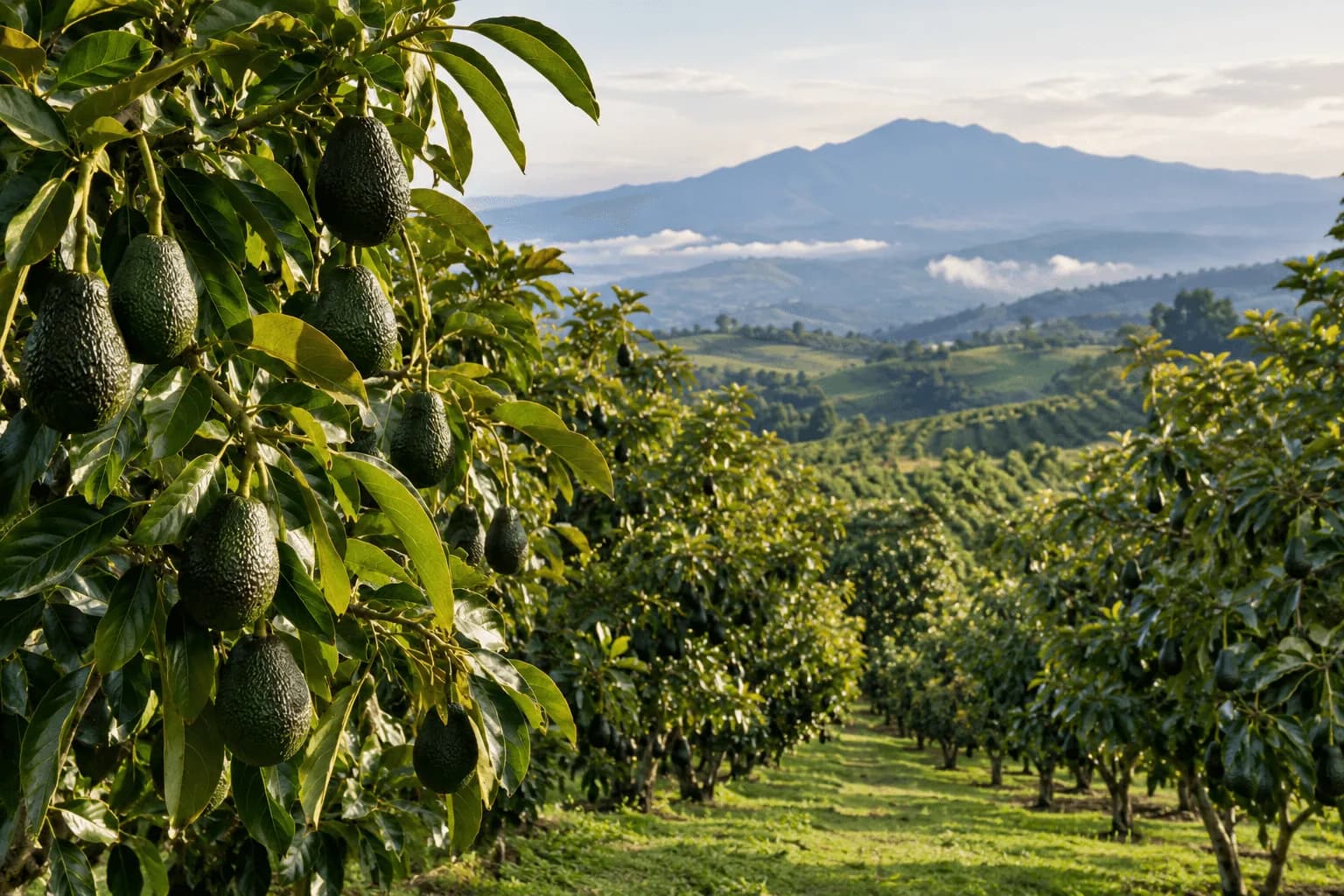
The Southern Highlands, essentially. Njombe is the heart of it, with Mbeya, Iringa and Songwe around it, and smaller northern volumes out of Arusha and Kilimanjaro. The altitude is the point: these are cool, high, well-watered districts where Hass colours properly and where the fruit does not race through maturity the way it does in hotter country.
The structural story worth knowing is that the crop is heavily smallholder. Government and industry bodies have been building collection centres across the belt — twenty are planned across Mbeya, Iringa, Rukwa, Ruvuma and Njombe — specifically so that fruit from small orchards reaches an export packhouse in a condition that survives the trip. For a buyer, that is the difference between an origin with a supply chain and an origin with trees.
Why does the season matter so much?
Avocado buying is a calendar problem before it is a price problem. The global year is stitched together from origins that overlap awkwardly, and the weeks where two big suppliers are both short are the weeks that hurt. Tanzania's window — roughly February to mid-September — sits usefully against the Peruvian and South African programmes and gives a European or Indian buyer a second East African option alongside Kenya.
It is also worth saying plainly what the window is not. Tanzania is not a year-round origin, and an exporter who implies otherwise is either planning to buy fruit from someone else's country or planning to disappoint you in November.
“Avocado buyers do not get burned on price. They get burned on arrival condition, and arrival condition is decided before the fruit is even picked.”
- Daniel Mahenge, Logistics Coordinator
How is the fruit specified?
Three things, in this order: count, class and dry matter.
Count is how many fruit fill a 4 kg carton, so a lower number is a bigger avocado. The range runs 12 to 30. Northern European retail generally wants 16 to 20 — the size that fits a two-for shelf pack and a household that will eat both. Indian and Gulf wholesale buyers often prefer larger fruit, meaning lower counts. Specify what you want; the difference between count 18 and count 24 is the difference between a retail programme and a food-service one.
Class comes from the UNECE FFV-42 standard: Extra Class, Class I and Class II. Essentially every European buyer requires Class I as a minimum, which permits slight defects in shape, colour or skin so long as they do not affect the flesh, keeping quality or general presentation. Put the class in the contract rather than assuming it.
What is dry matter, and why does everyone talk about it?
Dry matter is the percentage of the fruit that is not water, and for avocados it is a direct proxy for oil content and therefore for maturity. It is the single most useful number in the whole trade, because avocados do not ripen on the tree — they ripen after picking, and only if they were mature enough when picked.
The regulatory floor for Hass is 21 per cent. Fruit picked at the floor is technically compliant and commercially miserable: it ripens unevenly, arrives rubbery, and tastes of very little. European importers have converged on 23 per cent as the level worth paying for, and that is what we test to — per orchard block, before picking is authorised, not as an average across a farm.
A calendar tells you nothing here. The only honest answer to "is the fruit ready" is a dry-matter result from that block, that week.
The certification question, answered honestly
European retail programmes require GlobalG.A.P. at farm and packhouse level, often with GRASP or an equivalent social module on top. Tanzania has moved fast on this — more than six thousand growers now hold GlobalG.A.P. certification, and the export packhouses were built around the requirement.
Here is the part exporters tend to blur. Those certificates belong to the farms and the packhouses. They are not ours, and we will not describe them as ours. What we will do is name the specific farm and packhouse behind your consignment and give you the certificate references so you can verify them in the scheme's own database before you contract. If a supplier answers the certification question with a company brochure rather than a certificate number, that is the answer.
Cold chain and the Mombasa question
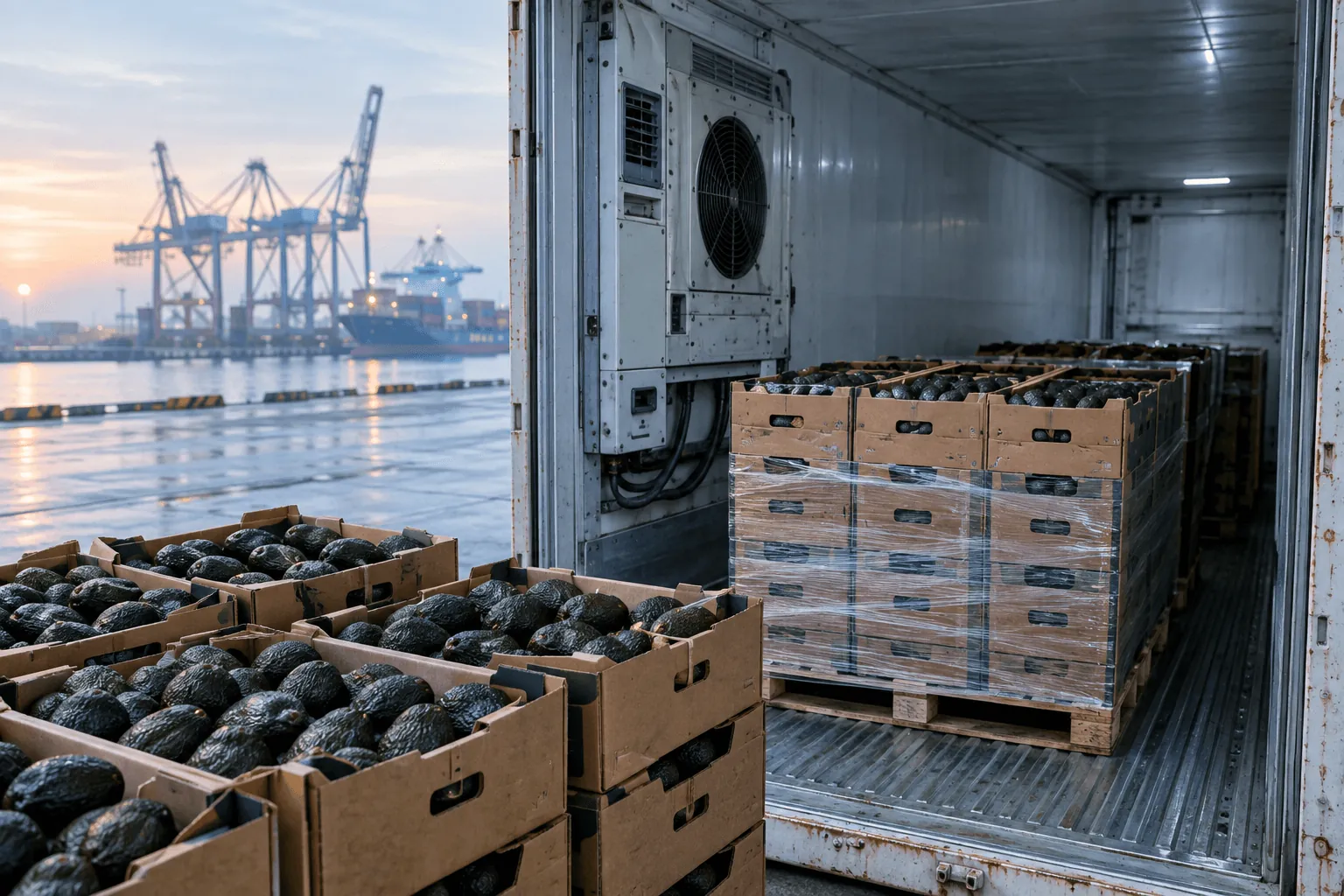
Field heat is the enemy. Fruit comes out of the orchard warm and has to be cooled within hours, then held and shipped at a pulp temperature of 5 to 6 degrees. On the long lanes to Europe the container runs under controlled atmosphere — oxygen held low and carbon dioxide raised, within the bands the fruit tolerates — which stretches Hass to around six weeks of usable life and makes sea freight viable at all.
Which brings up the awkward operational fact. Tanzanian avocados very often leave through Mombasa, in Kenya, rather than Dar es Salaam. Reefer capacity and sailing frequency in East Africa are concentrated there, and perishable cargo cannot wait for a better schedule. It adds a road leg and a border, and it is what most of the industry does, including us. An exporter who tells you their fruit sails weekly out of Dar is describing an ambition rather than a booking.
Whatever the routing, the reefer's temperature trace should arrive with the documents. Cold chain you cannot audit after the fact is cold chain you are taking on trust.
Related reading
Leave a Comment
Your email address will not be published.