
At a glance
- AA means screen 18 and above, roughly 7.1 mm — a size and density grade, not a cup score.
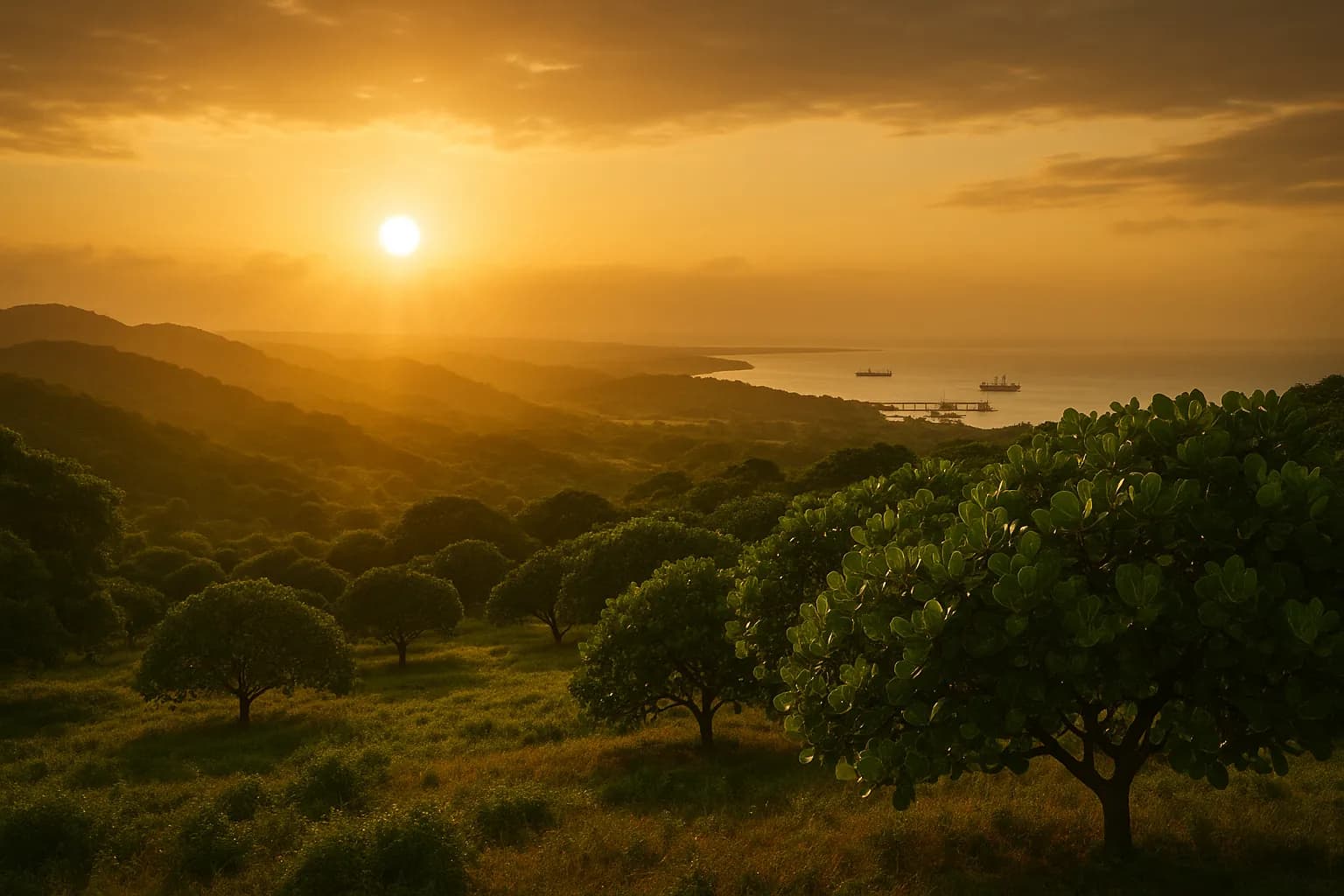
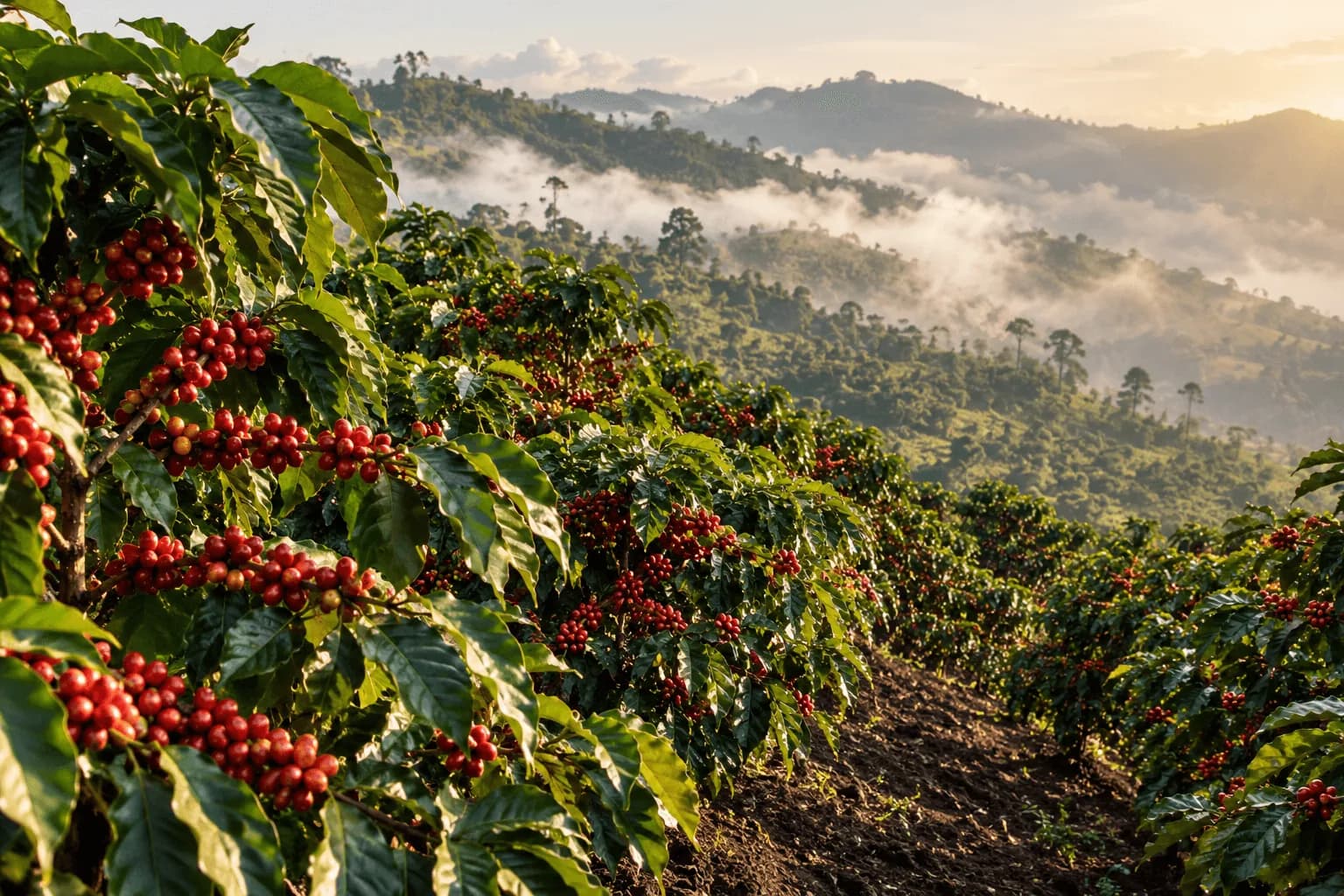
- Arabica comes from the northern Kilimanjaro and Arusha slopes and, increasingly, the Southern Highlands around Mbeya.
- Most Tanzanian arabica is fully washed and dried on raised beds; Kagera robusta is natural-processed.
- Arabica is picked from around June to October and robusta from around May to August; new-crop lots trade through most of the July-to-June marketing year.
- Packing is 60 kg sisal or jute bags, moisture 10 to 12 per cent, around 300 bags to a 20-foot container.
- Over 90 per cent of Tanzania's coffee is exported, and the country has been shipping it for more than a century.
Tanzania has an awkward position in the coffee trade. It shares a border and a mountain range with Kenya, uses the same grading vocabulary, grows at comparable altitude, and produces a cup that survives a blind tasting against its neighbour perfectly well. It also trades at a discount to Kenya that has very little to do with what is in the bag. This guide is about what you are actually buying when you buy Tanzanian AA, written from the export desk rather than from a roastery blog.
What does AA actually mean?
Size. Nothing else. AA is coffee that does not fall through a screen 18 sieve — holes eighteen sixty-fourths of an inch across, roughly 7.1 millimetres. A is screen 17, about 6.75 mm. B is screen 16, about 6.35 mm. Tanzania grades on density as well, so a large but light bean will not carry the top grade, but the letter on the bag is fundamentally a statement about how big the beans are and how evenly they will roast.
This matters commercially and it is routinely misunderstood. A roaster pays for AA because a uniform bean size gives a predictable roast curve — small beans in a large-bean batch scorch while the big ones are still developing. That is a real, physical reason to pay more. What AA does not tell you is how the coffee tastes. A superb B lot from a good washing station will out-cup a mediocre AA every time, and anyone selling you screen size as a flavour guarantee is telling you what they think you want to hear.
Below the main bands Tanzania runs a long tail: C, E, F, AF, TT, UG and TEX, covering smaller beans, oversized malformed elephant beans, light and broken material, and off-grade lots. They are real grades with real buyers, mostly in blending and soluble extraction, and they trade at steep discounts. Peaberry — PB — sits outside the size system entirely, separated by shape.
Where does the coffee come from?
Two arabica regions that behave like different origins. The north is the one everybody has heard of: the volcanic slopes of Kilimanjaro and Mount Meru, around Moshi and Arusha, where coffee has been a cash crop for over a century and where the Tanzania Coffee Board and the Moshi auction still sit. Northern lots tend to be brighter and more winey, with the blackcurrant note the region is known for.
The Southern Highlands — Mbeya, Songwe, Njombe and Ruvuma, out toward the Malawi and Zambia borders — were planted much later, from the 1970s, and now grow the larger share of the crop. Southern lots generally read rounder: more chocolate and caramel, softer acidity, a fuller body. Neither is better. They are different tools, and a blender who knows the difference can buy both from one desk.
Robusta is its own world. It grows in Kagera, on the western shore of Lake Victoria, where the Haya were cultivating coffee long before arabica arrived in the country at all. It is natural-processed, screen-graded rather than lettered — Extra at screen 18, Superior at screen 16 — and it goes into espresso blends and soluble extraction. For a buyer trying to move robusta origin away from a single Asian supply base, it is worth a look.
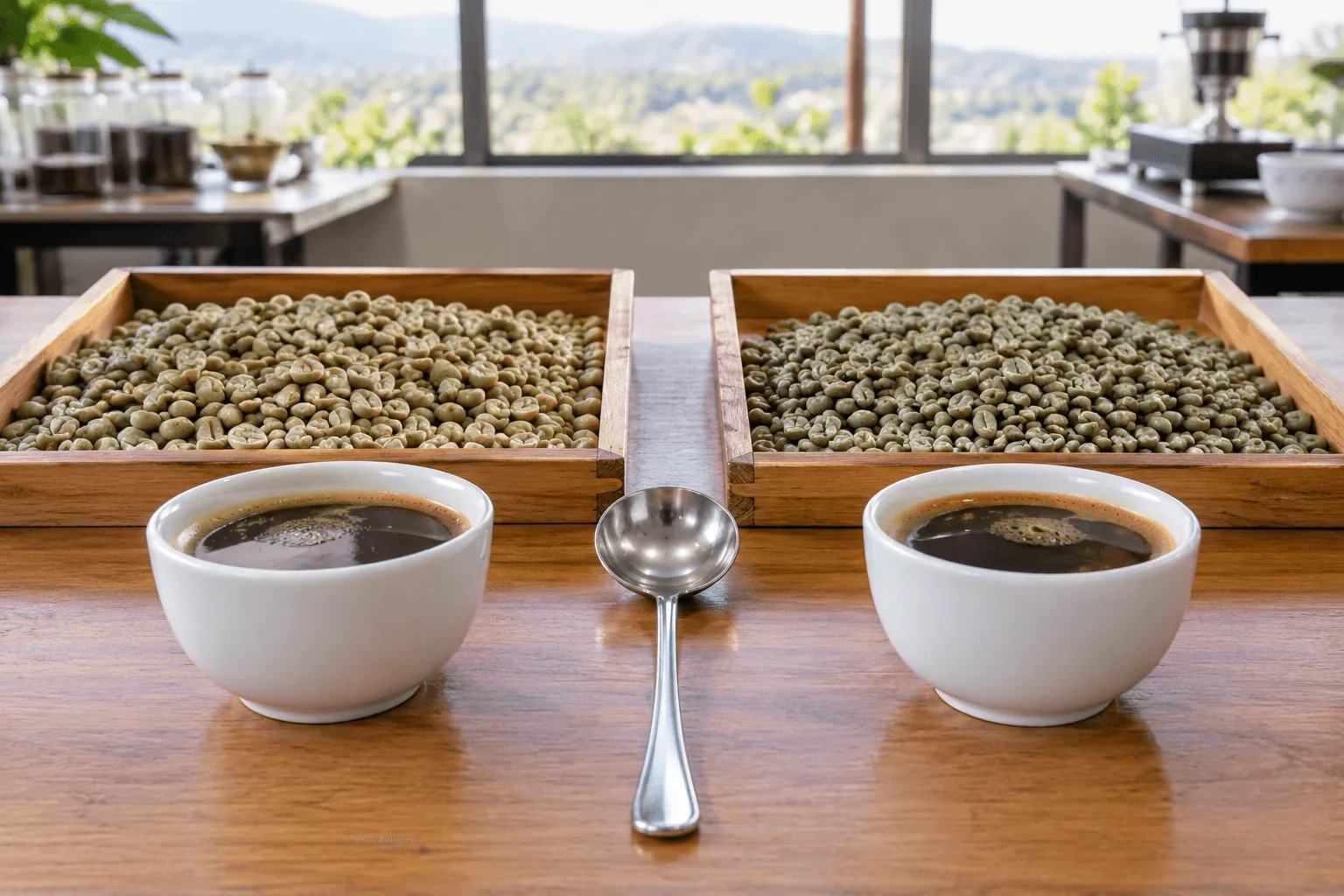
“Cup the Tanzanian lot and the Kenyan lot blind, then look at the two offer sheets. That comparison has won us more coffee buyers than anything we have ever written.”
- Joachim Mbwana, Sourcing Lead
Washed or natural?
Most Tanzanian arabica is fully washed — depulped, fermented, washed and dried on raised beds — which the trade calls mild arabica and which is what produces the clean, citric profile the origin is bought for. Natural-process arabica, where the cherry is dried whole, is increasingly available from the south, partly because washing is water-intensive and partly because the fruit-forward cup has its own market. Kagera robusta is natural as a matter of course.
If your roast profile depends on it, specify it. Washed and natural from the same farm are not interchangeable, and a contract that says only "Tanzania AA" leaves the decision with whoever is filling the bags.
When do you have to buy?
Earlier than most new buyers expect. Arabica is picked from roughly June to October, with the southern regions usually moving first, and robusta from around May to August. Processing, drying, milling, grading and the auction cycle then sit between harvest and shipment, so new-crop lots come to market over the following months and the strongest ones are committed early.
The commercial calendar runs ahead of all of that. Serious volume is discussed while the cherries are still on the trees. A buyer who opens the conversation in February, when the first containers are moving, is choosing from what nobody else committed to — which is a perfectly good way to buy if you are flexible on grade, and a bad one if you are not.
How is a container actually bought?
- Name the grade and the process: "Arabica AA, fully washed" rather than "Tanzania AA".
- Name the region if it matters to your profile — northern and Southern Highlands lots cup differently.
- Agree moisture at 10 to 12 per cent, with the figure measured on the lot you are buying.
- Ask for a sample of 300 g to 1 kg drawn from the marked lot, and cup it before you contract.
- Decide on packing: standard 60 kg sisal or jute, or hermetic liners if the lane is long and humid.
- Work back from your roasting schedule to a shipment month, then to a booking date that sits ahead of the crop.
A 20-foot container takes around 300 bags of 60 kg, about 18 tonnes. That is the practical working minimum for coffee, and it is the volume most first contracts are written around. Everything above that is a programme conversation rather than a trade.
Next steps
- Wholesale green coffee supplier overview- Container minimum, lot checks and samples
- Tanzania Coffee Grades Explained- AA, A, B, PB and the long tail below them
- Tanzanian Arabica AA Green Coffee- the specification and packing detail
- Tanzanian Robusta Green Coffee- Kagera natural, Extra and Superior screens
- Buyer FAQ- MOQs, samples, testing and shipping answered
Related reading
Leave a Comment
Your email address will not be published.