

At a glance
- Nearly every rejected avocado load fails on immaturity or on temperature, and both are decided before sailing.
- Dry matter is the maturity test — 21 per cent is the legal floor, 23 per cent is the commercial one.
- Fruit must be picked to a block-level test in the week of harvest, not to a calendar or a farm average.
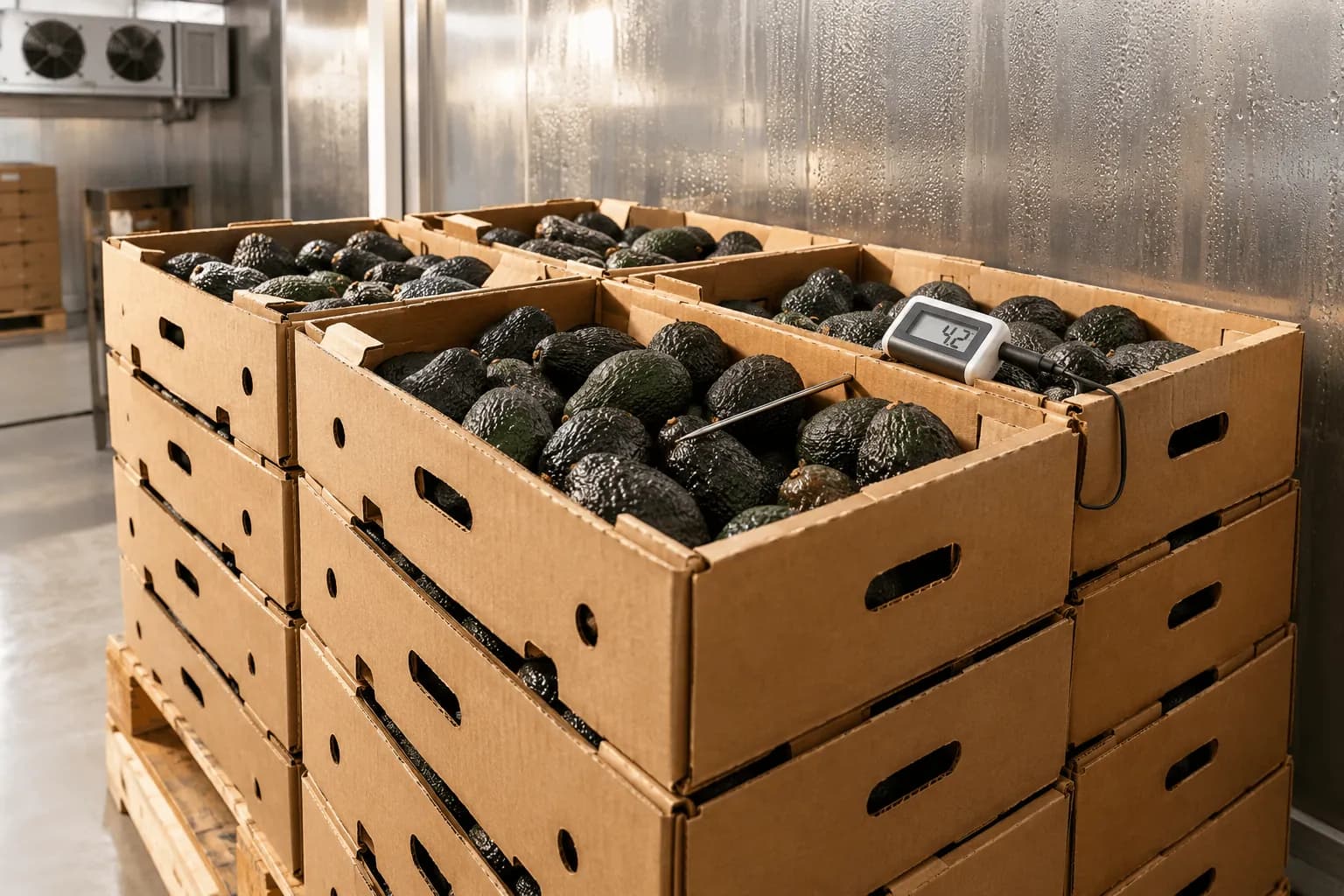
- Hass is carried at 5 to 6 degrees pulp temperature; too cold causes chilling injury the buyer finds after ripening.
- Controlled atmosphere stretches usable life to around six weeks and makes long sea lanes viable.
- Require the reefer temperature trace with the documents — unaudited cold chain is trust, not evidence.
Dry commodities forgive you. A bag of sesame that sat a week too long in a warm shed is still a bag of sesame. Avocados do not forgive anything. A container can leave origin looking immaculate and arrive as a claim, and when it does the cause is almost always one of two things: the fruit was not mature when it was picked, or the temperature did something it should not have. Both were determined before the vessel left.
Failure one: the fruit was never ready
Avocados are unusual among fruit in that they do not ripen while attached to the tree. They accumulate oil, and they only begin to soften once picked. That single fact drives the whole quality system, because it means the decision that determines how your fruit arrives is the decision to pick it.
Dry matter measures what has accumulated. A sample of flesh is weighed, dried, and weighed again; the percentage that remains is the dry matter, and it tracks oil content closely enough to be the industry's maturity standard. Below about 21 per cent, Hass will not ripen properly — it goes rubbery, it tastes watery, and no amount of careful handling downstream rescues it. That 21 is the regulatory floor, and it exists to keep genuinely unripe fruit out of the market rather than to describe good fruit.
European importers settled on 23 per cent as the number worth buying, and the gap between 21 and 23 is where a great deal of disappointment lives. Fruit at 21.5 is legal. It is also the fruit a ripener will complain about, a retailer will mark down and a consumer will not buy twice.
The testing detail matters as much as the number. A dry-matter result is only meaningful for the block it was taken from, in the week it was taken. Orchards mature unevenly — altitude, aspect, tree age and irrigation all shift it — so a single farm-level figure used to authorise a whole week's picking is a number that describes nothing in particular.
“You cannot inspect maturity into fruit after harvest. Either someone tested that block before picking, or nobody knows what is in the carton.”
- Asha Ngonyani, Quality Manager
Failure two: the cold chain broke, quietly
The second failure is more insidious, because the fruit usually looks fine on arrival and the damage only appears once it ripens. Hass is carried at a pulp temperature of around 5 to 6 degrees, sometimes a little cooler for late-season fruit. The window is narrower than it sounds in both directions.
Run it warm and respiration continues, the fruit ripens during transit, and it arrives soft, over-mature and worth a fraction of the contract. Run it cold and you get chilling injury — the flesh greys or blackens, vascular strands darken — and crucially the fruit looks perfectly normal until the buyer ripens it and cuts it open. By then the container has been accepted, the argument is retrospective, and everybody is reaching for the temperature record.
Field heat is the part most often underestimated. Fruit leaves the orchard warm and starts consuming itself immediately; the hours between picking and the cooling tunnel are the least visible and most consequential part of the whole chain. A packhouse that cannot tell you its typical pick-to-cool interval is telling you something.
What controlled atmosphere actually does
On long lanes the reefer runs under controlled atmosphere: oxygen lowered and carbon dioxide raised within the range the fruit tolerates, which slows respiration and holds the fruit dormant. For Hass this stretches usable life to roughly six weeks, and it is the reason avocados can reach northern Europe from East Africa by sea at all rather than by air.
It is not a free upgrade. Oxygen pushed too low produces off-flavours and flesh browning; carbon dioxide pushed too high browns the skin and does the same to the taste. The settings are well established and should be agreed in the contract rather than left to whoever configures the box at the terminal.
The five lines that prevent the argument
- Minimum dry matter, with the requirement that the block-level test result authorising the pick is supplied.
- Count per 4 kg carton and quality class, stated explicitly rather than assumed from a previous order.
- Pulp temperature at loading, and the carrying temperature for the voyage.
- Whether controlled atmosphere is required, and the gas envelope to be used.
- That the reefer's continuous temperature trace is supplied with the shipping documents, not on request afterwards.
None of this is exotic. It is what a competent fresh-produce contract has always said, and the reason it is worth writing down is that the failures it prevents are invisible at the moment they happen. By the time an avocado problem is visible, it is a commercial negotiation rather than a quality question — and the party holding the container is rarely the one who caused it.
Related reading
Leave a Comment
Your email address will not be published.